
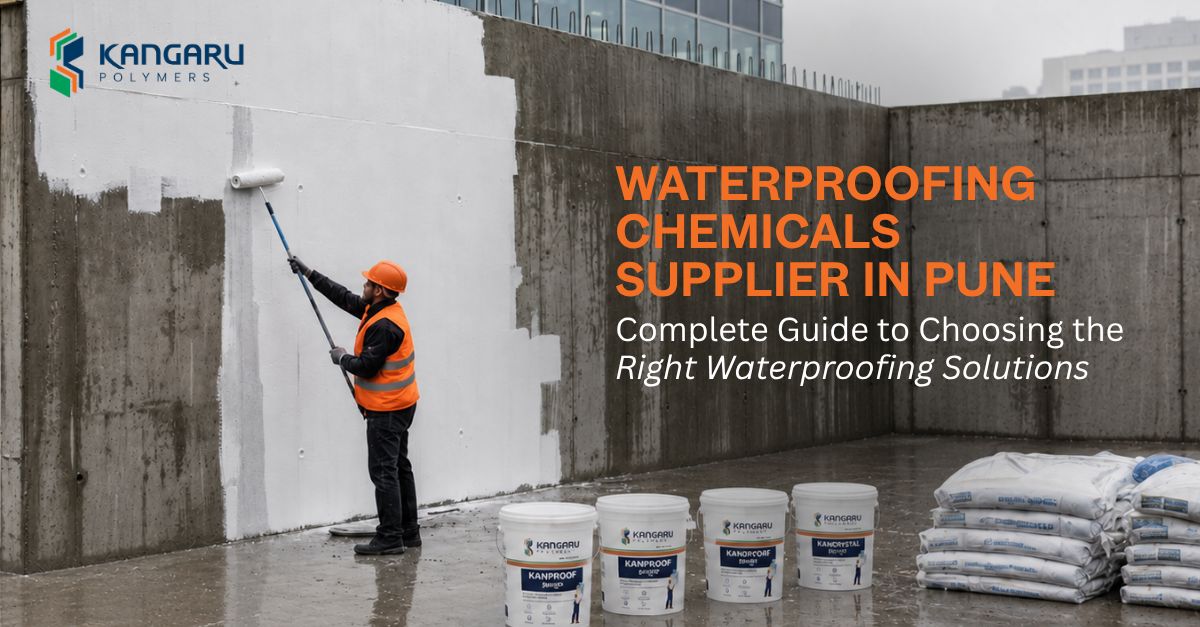
Grouting is an important construction technique used to seal cracks, joints, voids, and unwanted water pathways in concrete structures. It can help control water seepage, improve structural protection, and address specific repair requirements in moisture-prone areas.
For basements, tunnels, foundations, water tanks, and other concrete structures, selecting the right grouting system depends on the type of crack, leakage condition, substrate, and required performance. Kangaru Polymers provides polyurethane and epoxy-based grouting solutions designed for different construction and waterproofing applications.
What Is Grouting?
Grouting involves injecting or filling a suitable material into cracks, joints, voids, or other unwanted pathways within a structure. The selected grout penetrates the required area and forms a filling or sealing system according to the application.
In waterproofing applications, grouting can be particularly useful for leak arresting and crack injection. It can also be used for void filling and structural grout applications, depending on the product and project requirement.
The right solution should be selected after considering crack width, moisture conditions, water pressure, substrate condition, and the intended application.
Types of Grouting Solutions
Different construction conditions require different grout formulations. Kangaru Polymers offers polyurethane foam and epoxy grout systems for specific applications.
1. Polyurethane Foam Grouting
Polyurethane-based systems are useful for leak arresting, crack injection, void filling, and waterproofing applications.
Kangrout PU 1K Foam is a single-component flexible foaming grout. It forms a rubber-like, closed-cell stable foam and has low viscosity, allowing it to penetrate even thin cracks. It is suitable for leak arresting, crack injection, void filling, and waterproofing applications.
Kangrout PU 2K Foam is a two-component rigid foaming grout with higher viscosity and a pot life of approximately 30–50 minutes. After forming hard foam, it provides high compressive, adhesive, and tensile strength. It can be used for concrete cracks, honeycombs, joints, pipe intrusions, water tanks, tunnels, dams, sewers, manholes, and negative-side waterproofing applications.
2. Epoxy Grouting
Kangrout EP 200 is a two-component epoxy grout with a water-like consistency. It is moisture insensitive, has low creep characteristics, and offers resistance to most chemicals along with high tensile, flexural, and compressive strength.
It is commonly used as a structural grout for crack widths ranging from 0.25 mm to 9 mm, making it suitable for specific structural crack repair requirements.
Applications of Grouting
Grouting can be used across several construction and infrastructure applications where cracks, leakage, voids, or unwanted water pathways need to be addressed.
Common applications include:
- Concrete crack injection
- Leakage arresting
- Void filling
- Concrete joints
- Honeycomb areas
- Water tanks
- Basements
- Tunnels
- Foundations
- Dams
- Sewers and manholes
- Negative-side waterproofing
- Structural grouting
The appropriate product depends on the condition of the structure and the performance required from the application.
Benefits of Using the Right Grouting System
A properly selected grouting solution can provide several practical benefits:
Leak Control: Polyurethane foam grouts can be used for arresting leakage and sealing unwanted water pathways.
Crack Treatment: Low-viscosity formulations can penetrate narrow cracks, helping address specific injection requirements.
Void Filling: Grouting systems can fill unwanted voids within suitable construction areas.
Structural Support: Epoxy grout systems such as Kangrout EP 200 can be used for structural grout applications where high mechanical strength is required.
Durable Protection: Correctly selected and applied grout can contribute to long-term protection against water seepage and help maintain the integrity of concrete structures.
How to Choose the Right Grouting Solution?
Choosing the right system should not be based only on the product name. The actual site condition should be evaluated first.
Consider:
- Type of crack: Identify whether the requirement involves thin cracks, concrete joints, honeycombs, or other defects.
- Water condition: Determine whether active leakage or moisture is present.
- Required flexibility: Flexible and rigid foam systems can have different application requirements.
- Structural requirement: Structural applications may require an epoxy-based grout with appropriate strength characteristics.
- Application area: Basements, tunnels, water tanks, foundations, and other areas may require different solutions.
- Technical guidance: Product selection and application should follow project-specific requirements.
Kangaru Polymers supports construction professionals with technical expertise and application-focused solutions, helping select products according to project conditions.
Why Choose Kangaru Polymers for Grouting Solutions?
Kangaru Polymers focuses on construction chemical solutions that combine product functionality with technical support. Its grouting portfolio includes polyurethane foam and epoxy systems for leak arresting, crack injection, void filling, waterproofing, and structural grout applications.
The company also provides technical consultancy, specification support, and application guidance to help construction professionals make suitable product decisions.
FAQs
What is grouting used for?
Grouting is used for applications such as crack injection, leakage arresting, void filling, waterproofing, and structural grouting.
Which grout is suitable for leakage?
Polyurethane foam grout can be used for leak arresting and waterproofing applications. The specific product should be selected according to site conditions.
What is chemical grouting?
Chemical grouting generally refers to specialized grout materials used for injection, sealing, void filling, or strengthening applications. The selection depends on the structure and project requirement.
Can grouting be used in basements and tunnels?
Yes. Kangaru’s polyurethane grouting systems are listed for applications including basements, tunnels, foundations, water tanks, dams, and other moisture-prone structures.
How do I select the right grouting solution?
Consider the crack or leakage condition, substrate, moisture exposure, required flexibility or strength, application area, and project requirements before selecting a grout system.
Conclusion
Choosing the right Grouting solution is essential for effectively addressing cracks, water leakage, voids, joints, and structural repair requirements. The suitable grout depends on factors such as crack condition, moisture exposure, substrate, required flexibility or strength, and application area.
Kangaru Polymers offers polyurethane foam and epoxy-based grouting solutions for applications including leak arresting, crack injection, void filling, waterproofing, and structural grouting. With technical consultancy and application guidance, Kangaru Polymers helps construction professionals select suitable grouting solutions based on specific project requirements.