
Concrete is widely used in residential, commercial, industrial, and infrastructure projects because of its strength and durability. However, concrete is not completely waterproof. Water can enter through pores, cracks, joints, and other vulnerable areas, potentially causing dampness, corrosion, and long-term deterioration.
A suitable waterproofing membrane can help protect concrete from water ingress and moisture-related damage. KANPROOF waterproofing membrane systems are developed to provide waterproof protection for suitable concrete structures and applications, with different technologies available according to project requirements.
Why Do Concrete Structures Need Waterproofing?
Concrete can absorb and transmit moisture through its pores and capillaries. Continuous exposure to water can affect the durability of a structure over time.
Waterproofing is particularly important for:
- Basements and foundations
- Terraces and roofs
- Podiums
- Water-retaining structures
- Wet areas
- Concrete decks
- Below-ground structures
The right waterproofing system helps create a protective barrier between the concrete and external water exposure.
What Is a KANPROOF Waterproofing Membrane?
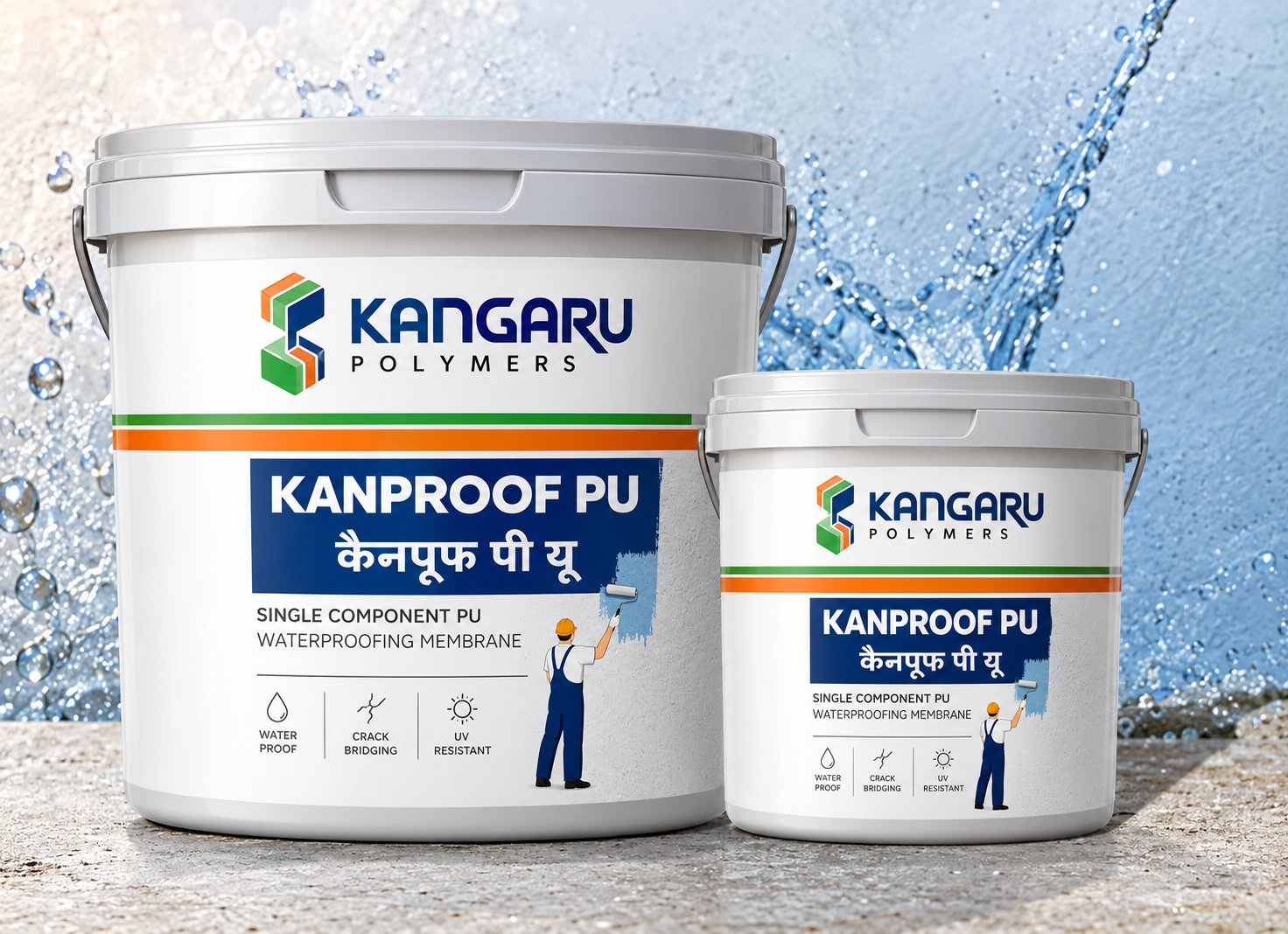
A KANPROOF waterproofing membrane is a waterproofing system designed to provide a protective layer over suitable concrete and building surfaces.
Kangaru Polymers offers different waterproofing technologies, including liquid-applied systems and fully bonded membrane solutions. The appropriate system depends on the structure, substrate, water exposure, and application requirements.
The objective is to create a continuous waterproofing layer that helps prevent water from reaching the protected concrete surface.
Key Features of KANPROOF Waterproofing Systems
1. Protection Against Water Ingress
The primary purpose of a waterproofing membrane is to reduce the entry of water into the structure. A properly selected and applied KANPROOF system can provide a protective barrier against water exposure in suitable applications.
2. Strong Bonding with Suitable Substrates
Adhesion is an important factor in waterproofing performance. A membrane needs to remain properly bonded to the substrate to provide effective protection.
Fully bonded waterproofing systems can help reduce the possibility of water travelling between the membrane and concrete when installed according to the recommended system.
3. Flexibility and Movement Accommodation
Concrete structures can experience minor movement because of temperature variations, settlement, and other factors.
Certain KANPROOF systems are designed with flexibility and elongation properties. These characteristics can help the waterproofing layer accommodate certain levels of movement and maintain protection.
4. Crack-Bridging Performance
Cracks can become potential pathways for water. Waterproofing systems with suitable crack-bridging properties can help maintain the continuity of the protective layer across certain minor cracks.
However, significant structural cracks should be properly assessed and treated before waterproofing.
5. Application Versatility
Different parts of a building have different waterproofing requirements. KANPROOF systems can be selected for applications such as roofs, terraces, basements, podiums, wet areas, foundations, and other suitable concrete structures.
This application-focused approach helps avoid using the same waterproofing system for every type of project.
Why Membrane Selection Matters
Not every waterproofing membrane is suitable for every concrete structure. The correct system should be selected based on:
- Type and condition of the concrete substrate
- Water exposure
- Internal or external application
- Expected surface movement
- Environmental conditions
- Required protection level
- Application and detailing requirements
Considering these factors before product selection can help improve the overall performance and durability of the waterproofing system.
Correct Application Is Essential
Even a high-quality KANPROOF waterproofing membrane requires correct installation. Surface preparation is one of the most important steps before application.
Dust, dirt, loose concrete, surface contamination, moisture conditions, and unsuitable substrate conditions can affect adhesion and performance.
Application thickness, detailing around joints and penetrations, curing, and compatibility with other materials should also follow the relevant product and system recommendations.
Kangaru provides technical consultancy, specification support, and application guidance to assist project teams with waterproofing requirements.
Applications of KANPROOF Waterproofing Systems
Depending on the selected system and product specification, applications may include:
- Concrete roofs and terraces
- Basements
- Foundations
- Podiums
- Water-retaining structures
- Wet areas
- Concrete decks
- Below-ground structures
The product should always be selected according to the specific project conditions and technical requirements.
Frequently Asked Questions
1. What is a KANPROOF waterproofing membrane?
It is a waterproofing system from Kangaru Polymers designed to provide protection against water ingress on suitable concrete and building surfaces.
2. Can KANPROOF systems be used on concrete?
Yes. Depending on the product, KANPROOF systems can be used for different concrete waterproofing applications, including roofs, terraces, basements, foundations, and other structures.
3. Why is membrane adhesion important?
Good adhesion helps keep the waterproofing system properly attached to the substrate and can reduce the risk of water movement beneath the membrane.
4. Can waterproofing membranes handle concrete movement?
Certain systems offer flexibility and elongation that can accommodate certain levels of substrate movement. The appropriate product should be selected based on the expected movement and application.
5. Is surface preparation necessary?
Yes. Proper surface preparation is essential for achieving the intended adhesion and waterproofing performance.
Conclusion
Concrete structures require effective protection from water and moisture to support long-term durability. A suitable waterproofing membrane can help reduce water ingress and protect the concrete from moisture-related deterioration.
KANPROOF waterproofing membrane systems provide different waterproofing technologies for various concrete and building applications. By considering factors such as adhesion, flexibility, crack-bridging capability, water exposure, substrate condition, and application requirements, project teams can select a suitable waterproofing approach.
With correct product selection, surface preparation, application, and technical guidance, KANPROOF systems can contribute to reliable waterproofing protection for concrete structures.